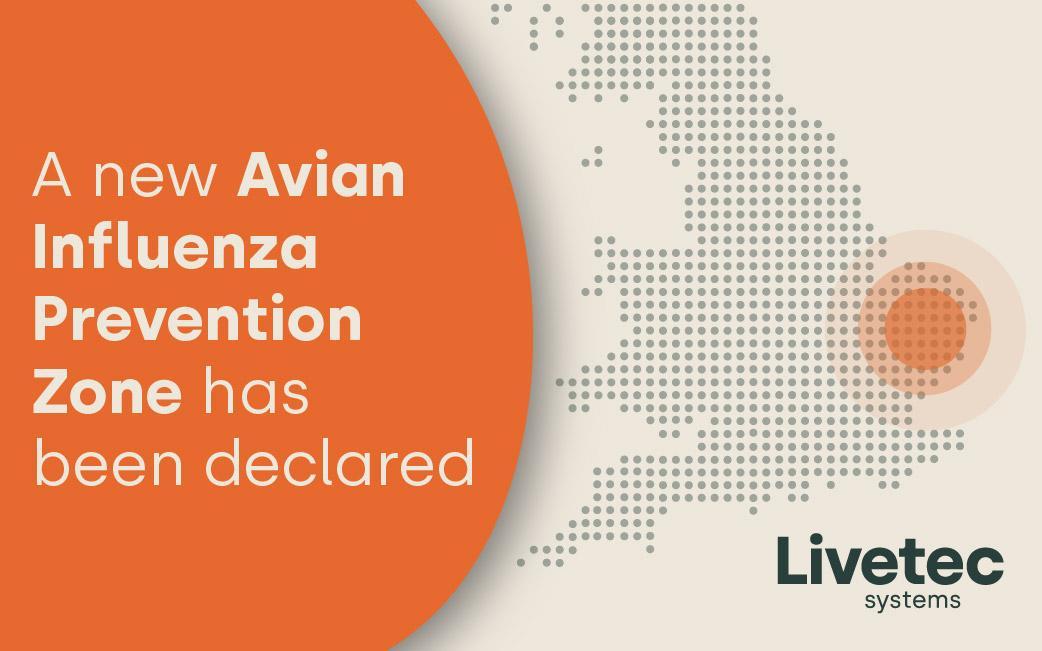
As part of our recent webinar on avian influenza risk and preparedness, we invited Gary Ford, Head of Strategy and Producer Engagement at BFREPA, to share his perspective on how the sector is responding to ongoing disease pressure.
In this conversation, with Jack Hughes from Livetec, Gary discusses how attitudes towards biosecurity are changing, where practical challenges still exist on farm, and why preparedness, training and collaboration across the industry remain essential.
The discussion below is taken directly from the webinar and has been lightly edited for clarity.
Q: From your view across the sector, is biosecurity still seen primarily as a compliance exercise, or is that mindset starting to shift?
Great question, Jack. In my observations and conversations with individual producers, that mindset shift definitely has taken place.
There’s much greater awareness of the threat posed not just by avian influenza, but by other poultry diseases as well. I think
producers get it now. It’s moved beyond that compliance code of practice, assurance scheme, tick-box exercise.
Producers do understand it. Some of that is down to poultry discussion groups that many
producers attend, conferences, the trade press, webinars like this, and our excellent private vets out in the field all repeating the message that biosecurity is the number one way of keeping your birds disease free.
And of course, the sheer number of cases we’ve seen recently plays a role. In the layer sector alone we had 28 cases in the 2025 calendar year, so there is much greater awareness now around the disease and what individual farmers need to do to minimise the risk to their business.
So yes, in my view the industry has experienced a cultural shift and sees this disease as the risk that it is, and understands what needs to be done to reduce the probability of disease on farm and make businesses more resilient.
Q: Where do policy requirements and assurance schemes sometimes clash with the realities of running a poultry farm?
I think the danger in the past has been that assurance policy has sometimes been made in a vacuum, behind a desk and far from the realities of running a poultry farm.
As we know, there are a lot of moving parts when it comes to running poultry farms.
What I would say now is that guidance, assurance and policy have become much more practical and achievable. They are still stretching, but stretching for a reason.
A good example is the work that APHA did with industry through the BIC to produce the biosecurity zones that form part of the Lion Code of Practice. That’s a really good example of where industry and government have come together to produce something practical that helps minimise the risk of disease on farm.
Q: With the current market conditions and hopefully a quieter period over the summer, how should producers think about investing in biosecurity?
This should be an ongoing process. It should be happening all the time because biosecurity should always be a priority.
Producers should be asking themselves: what can I do to improve biosecurity on my farm?
There are tools, people and businesses out there that can help identify pinch points, often based on experience from farms where disease breakdown has occurred.
Sometimes when we’re very familiar with our own farm, we don’t see the obvious things that visitors notice straight away.
So I would absolutely recommend producers engage with their private vet or with industry specialists to get that professional advice.
In terms of practical changes on farm, there are a few areas worth thinking about.
One is designated biosecurity facilities – areas where people can change clothing and apply PPE properly. These need to be clearly designated and have enough space.
Another is concrete around sheds. I appreciate it’s expensive, but there really is no better material for keeping the ground dry and well drained around poultry houses.
We also need to think about rainwater management. Are gutters clean and maintained? Are downpipes correctly connected to soakaways? Are they spilling onto concrete and potentially allowing water to enter buildings?
And finally, I’m a big advocate of setting the right tone for visitors when they first arrive on farm.
Visitors could be egg collection drivers, feed deliveries, vets, assurance auditors or contractors. Installing a proper security gate or infection control barrier helps set expectations straight away.
Yes, these systems cost money- perhaps £25,000 in some cases but when you compare that with the risk of disease incursion into your flock, it can be a worthwhile investment.
Q: There’s a lot of biosecurity training available. Is it sufficient, or is there still a risk that it becomes a tick-box exercise?
I actually think the poultry sector is well served in this respect.
We have strong assurance schemes that require training, and we have delivery frameworks such as the Lion Training Passport and other sector programmes that help deliver that training.
Professionalising the industry is really important. Training helps upskill people who work on farms – owners, employees and casual staff – because everyone needs to be part of the solution when it comes to minimising disease risk.
Could we have more courses? Within reason, more choice is always useful.
But the key point for me is that training needs to be practical and engaging. It shouldn’t just be sitting behind a desk watching a video for twenty minutes.
It needs to bring biosecurity to life and make it relevant to the day-to-day reality of working on farms.
Q: How have you seen outcomes differ between farms that have clear disease preparedness plans and those reacting in crisis?
The key word here is stress.
An outbreak is hugely stressful for everyone involved. Farmers don’t want to be in the position of dealing with diseased or dead birds.
From the feedback I’ve had from producers who have unfortunately been through outbreaks, those who had plans in place found that it helped to mitigate some of that stress.
They understood what would happen next and what was expected of them if their farm became an infected premises.
Industry is also working with Defra to produce clearer guidance outlining what happens step-by-step when a farm becomes an infected premises. That document should help raise awareness of the process.
Another thing we’ve done in recent years is what I call “buddying up.”
If a farm becomes infected, we try to connect them with another producer who has already been through the experience. That allows them to speak directly with someone who understands the situation and can explain what to expect.
Historically there was a stigma attached to avian influenza outbreaks, but with the number of cases we’ve seen in recent years that stigma has reduced.
Even so, producers can still feel a sense of guilt if it happens on their farm, so supporting each other through those situations is really important.
Our thanks to Gary Ford for sharing his insights and experience from across the sector.
While avian influenza continues to challenge the industry, one message came through clearly during the discussion: improving biosecurity, preparedness and awareness across the supply chain remains one of the most effective ways to reduce risk and strengthen resilience on farm.
If you would like to watch the full webinar or discuss your own contingency planning and biosecurity approach, click here.